

Advanced tools for welfare assessment in aquatic animals: Briding physiology and behavior (day 3) 15 July 2026
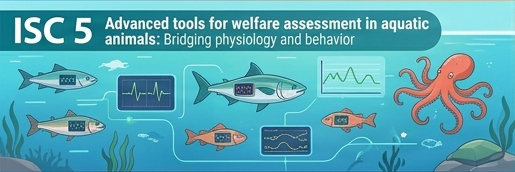
The International Summer School of the University of Cádiz launch the advanced training program Advanced tools for welfare assessment in aquatic animals: Briding physiology and behavior, designed to train students in the practical application of advanced tools to assess and promote the welfare of fish and cephalopods. Students will not only analyze the ethological and physiological foundations of these animals but also learn to identify objective biomarkers and use remote monitoring technologies to gain a comprehensive understanding of their condition. The course aims to foster critical thinking through the resolution of real-world problems, enabling participants to propose well-founded solutions to welfare challenges in farming or experimental settings.
Dates: 13-16/07/2026
Objectives: To achieve the course’s purpose, the following learning goals or specific objectives have been defined:
- Analyze the foundations of behavior, ethology, and physiology of key aquatic species, identifying how these factors reflect the animal’s welfare state.
- Become familiar with the main tools and biomarkers currently used in research to objectively monitor animal welfare.
- Apply theoretical knowledge in practice through the use of assessment tools at the Marine Cultures Service (SCI-CM) of the UCA and at ICMAN-CSIC facilities.
- Relate physiological responses to behavioral patterns to gain a comprehensive understanding of welfare in aquatic animals.
- Develop diagnostic and problem-solving skills through group resolution of a problem-based exercise, applying critical thinking to real case studies
Coordinator: Ismael Jerez Cepa (INMAR-UCA).
Participating entities: Servicios Centrales de Investigación en Cultivos Marinos (SCI-CM, Universidad de Cádiz), CCMAR – Universidade do Algarve, Instituto Mediterráneo de Estudios Avanzados (IMEDEA-CSIC) e Instituto de Ciencias Marinas de Andalucía (ICMAN-CSIC).
More information: https://internacional.uca.es/isc-5-advanced-tools-for-welfare-assessment-in-aquatic-animals-briding-physiology-and-behavior/